
IROS 2026: Why Humanoid Robotics Needs Custom Motion Data More Than Ever
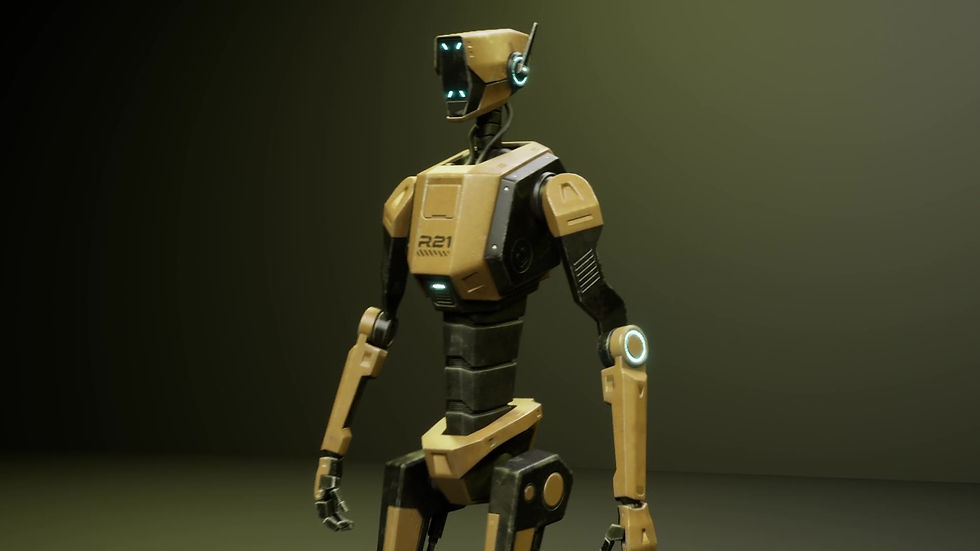
The world's leading humanoid robotics and embodied-AI researchers are converging on Pittsburgh this week for IROS 2026 — the IEEE/RSJ International Conference on Intelligent Robots and Systems, September 27 to October 1 at the David Lawrence Convention Center.
Figure AI, Boston Dynamics, Unitree, Agility Robotics, 1X Technologies, Field AI, Apptronik, Sanctuary AI, and the leading university robotics labs will all be represented. Papers will be presented, demos will be run, new platforms will be announced. And underneath every single one of those projects, there is the same quiet constraint deciding what the robot can and cannot do: the training data.
The real IROS story: the data is the bottleneck
Walk any humanoid robotics lab today and you will hear the same thing. The hardware is improving faster than the software. The models are improving faster than the datasets. The constraint on what a humanoid robot can learn is almost never "we don't have the right model architecture" — it's "we don't have the right training data."
Imitation learning, the dominant approach for teaching humanoid robots to move and manipulate, is only as good as the human demonstrations the model trains on. Reinforcement learning policies need demonstration data to bootstrap. Whole-body control systems need motion priors. Every one of these approaches depends on custom motion capture data for humanoid robots — data captured for the specific tasks, specific morphology, and specific training objectives of a given project.

Why off-the-shelf datasets aren't enough
For years, humanoid robotics research leaned on existing motion capture libraries built for animation and games. Those datasets are good at the actions animators cared about — walking, dancing, combat, cinematic performance. They are rarely good at the actions robotics engineers actually need: precise object manipulation with specific prop geometries, cooperative multi-agent behaviour, balance recovery under disturbance, long-duration continuous activity, loco-manipulation, physically grounded contact with variable loads.
The gap between "motion data that exists" and "motion data that a specific humanoid platform needs for a specific task" is where custom motion capture matters.
What custom motion data for humanoid robots actually involves
Producing custom motion data that drops cleanly into a humanoid training pipeline is more than pointing cameras at a performer. It involves:
Task scoping — translating the robot's training requirements into specific actions, performers, durations, and prop configurations.
Optical capture — full body, hand and finger detail, multi-actor where cooperative behaviour is required, object interaction with real props.
Cleaning and solving — removing noise, filling gaps, validating the data against training-quality thresholds.
Retargeting — mapping the human skeleton to the target humanoid, whether that's Unitree G1, a research prototype, or a custom morphology.
Delivery format matching — exporting into the exact formats the customer's training pipeline consumes: SOMA BVH, Unitree G1 CSV, FBX, NPZ, PKL, Parquet, metadata JSON, custom skeletons on request.

Each step matters. Capture without clean retargeting produces motion a robot can't use. Clean retargeting without format matching produces motion the training pipeline can't ingest. The whole chain has to work for the data to earn its place in training.
Where Apple Arts Studios fits
For 15+ years we've captured motion for AAA films and games. Over the last two years, that same craft — the pipeline, the tooling, the delivery discipline — has moved to producing the human motion data that trains humanoid robots and embodied AI.

What we build for robotics teams:
Custom motion capture captures scoped around a specific robot and task list
Full body + hand/finger motion, object interaction, multi-actor cooperative capture
Clean retargeting to Unitree G1, custom humanoid skeletons, or your target platform
Delivery in SOMA BVH, Unitree G1 CSV, FBX, NPZ, PKL, Parquet, and metadata JSON — whatever the training pipeline uses
Metadata on every clip: action labels, performer profile, capture parameters, object data
Most of our work is custom. Every robot platform and every training objective is different, so we design the capture around what each customer's model actually needs to learn, rather than selling the same off-the-shelf library to everyone.

Try a free sample
We publish a free 5-hour production sample dataset on Hugging Face so robotics and AI teams can evaluate our capture quality, data structure, metadata, and delivery formats before starting a conversation.
If you're at IROS 2026 — let's connect
Whether you're attending IROS 2026 in Pittsburgh in person, following remotely, or returning next week to the question of what dataset your team needs next — if you're building a humanoid robot or training an embodied-AI model and the data layer is on your mind, we'd love to talk.
Frequently asked questions
What is custom motion capture data for humanoid robots? Motion capture data captured specifically around a target robot's training requirements — the exact tasks, performers, durations, prop configurations, and metadata the robot's learning model needs — rather than off-the-shelf library data captured for animation purposes.
How is the data retargeted to a humanoid robot? Captured human motion is cleaned, solved, and mapped from the performer's skeleton onto the target robot's skeleton. Common targets include Unitree G1, custom research humanoids, and bespoke morphologies.
What formats are supported for humanoid robot training pipelines? SOMA BVH, Unitree G1 CSV, FBX, NPZ, PKL, Parquet, and metadata JSON. Custom skeletons and formats are supported on request.
Can you capture multi-actor cooperative behaviour? Yes. Multi-actor optical capture, with full body and finger detail, is a core capability. This is what enables training data for cooperative manipulation and multi-agent behaviour.
How does a custom motion data engagement work? Scope the required behaviours and tasks with the robotics team → design the capture around that spec → capture, clean, and retarget → deliver training-ready data in the customer's required formats.
Talk to us about custom motion data
If you're training a humanoid or an embodied-AI model and the dataset isn't covering the behaviours you need — we build the data.
Apple Arts Studios — custom motion capture data for humanoid robots.